Origins
From Jacmel to Paris via the Sahel
The idea to create Jack Meal came about gradually. At the time, Johanna was working with the United Nations as an environmental officer. The challenge she set for herself was simple and urgent: to manufacture cooking tools locally using recycled, reusable, and replicable materials, in order to reduce dependence on wood and charcoal—the leading cause of deforestation in Haiti and many countries in the Sahel, as well as of respiratory illnesses and household burns affecting mainly women and children.
"Cooking is first and foremost a way of taking care of oneself, of others and of the resources that surround us. Jack Meal was born out of a conviction: to rethink our daily actions to make them fairer, more sustainable, more universal. It is a project rooted in the reality on the ground, born from the concrete need to accelerate the energy transition for all."

The story begins in January 2021 in Haiti
In the kitchens of Haitian schools and homes where Johanna (founder of Jack Meal) was then working to reduce the wood needed to cook food in Haitian kitchens and homes with a humanitarian agency.
Two urgent matters required attention:
- How can we continue to cook without depleting the forests?
- How can we make use of the plastic pollution that was invading seas, rivers and land?
Drawing on previous experience in Ethiopia and Bangladesh, Johanna immersed herself in the search for low-impact solutions: artisanal innovations, plastic recycling, low-impact technologies.
From this exploration arose a conviction: progress must be local, replicable and accessible.
Deeply attached to this country, the name Jack Meal is inspired by Jacmel, one of the most beautiful cities in the country.

The story of the thermal bag began to take shape in a humanitarian context
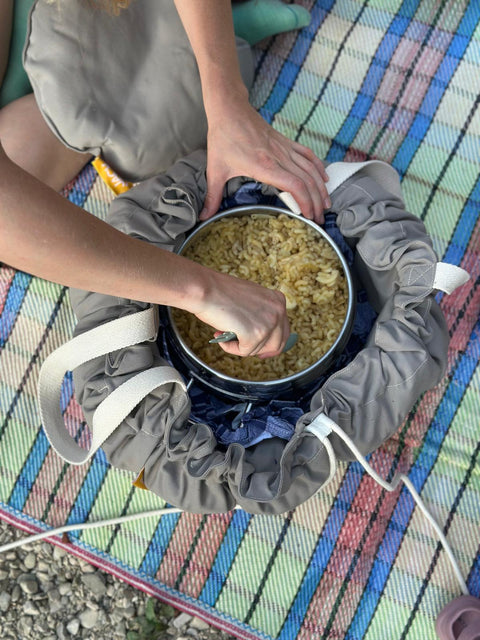
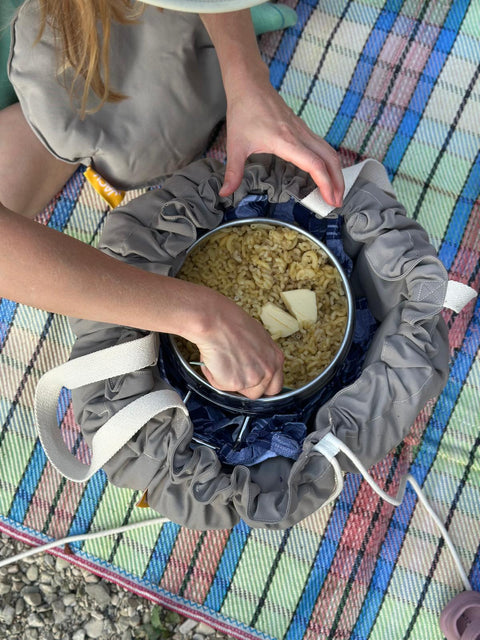
By rediscovering the principle of the Norwegian cooker , Johanna wanted to reinvent it using available materials.
She collected plastics, tested dozens of variations, measured thermal performance, and refined every detail with local stoves. Then she approached local entrepreneurs to replicate the innovation.
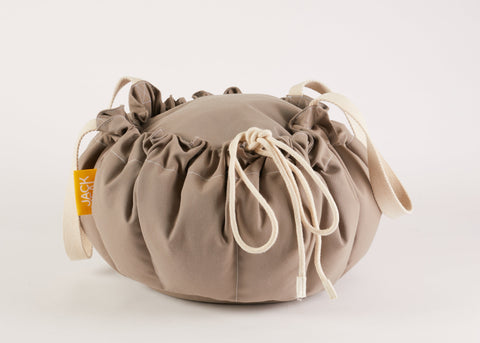
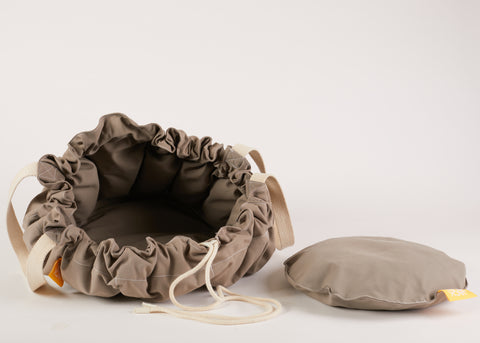
This iterative and collective process led to the creation of the first cooking bag, 100% designed and assembled locally—first in Haiti, then in Chad.
A smart and resilient kitchen is not based on a single object or technology, but on a philosophy: doing more with less, for the long term.
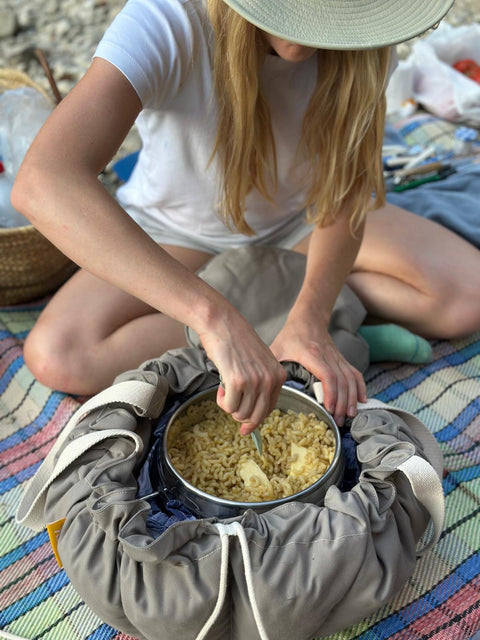
The project has spread from the Sahel to schools, from homes to refugee camps, enabling more than 6,000 families and school cafeterias to adopt a new cooking method: cooking in two stages—turning on the heat, then letting it do its work.

But one question remained: how to make these solutions accessible beyond humanitarian programs?
The answer became clear: by relying on the private sector . By offering innovative products manufactured locally, sold at a fair price, and by reinvesting part of the revenue to support the energy transition in the most exposed countries.
Jack Meal is the natural next step in this journey. An independent French company that transforms simple technology into a practical kitchen tool, built to last and designed for kitchens around the world.
Discover our bags