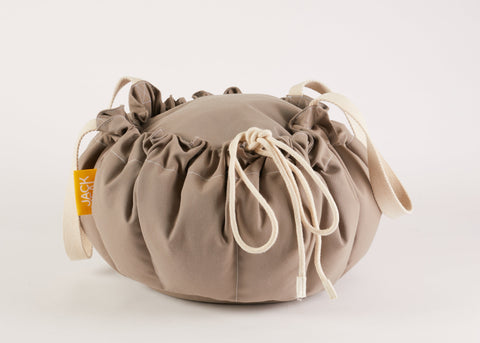
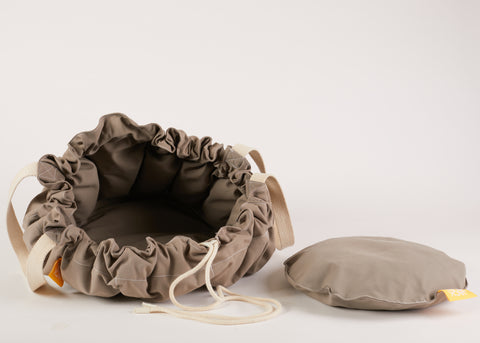
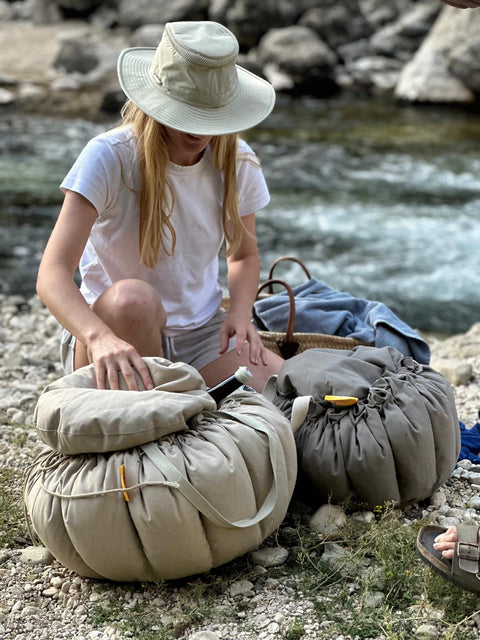
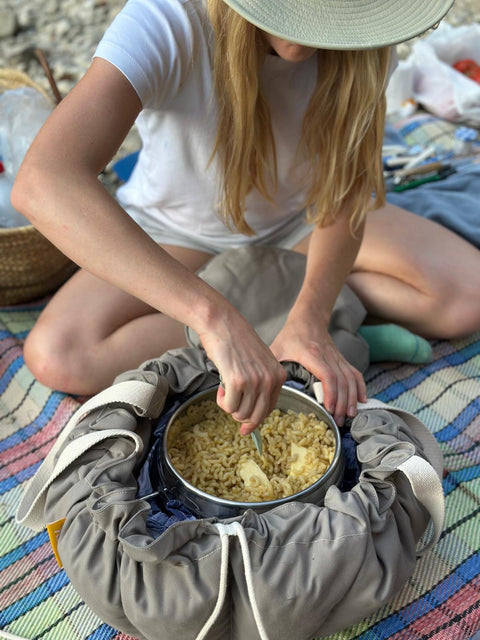
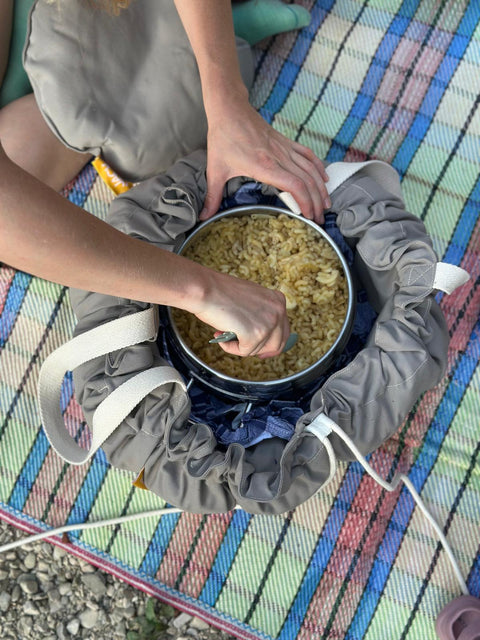
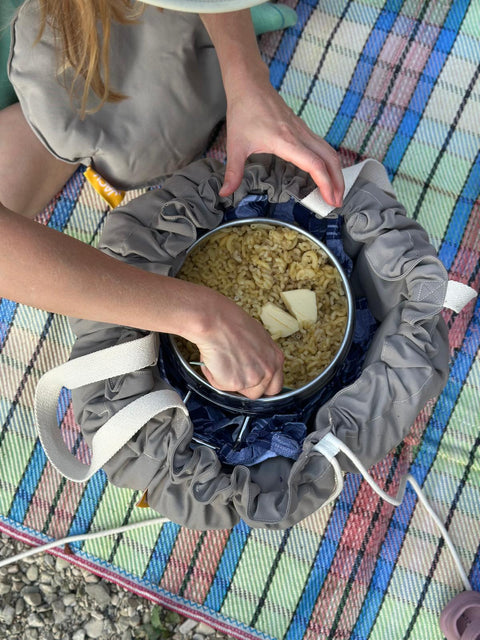
In the Résilience workshops in Roubaix, Frédérique Aplincourt oversees the production of Jack Meal bags. But above all, she runs a social reintegration workshop where sewing, precision, and kindness come together every day. An interview with a skilled woman, dedicated and proud to pass on her knowledge.

Interview
Frédérique, can you tell us about your background and what led you to direct a workshop like Resilience?
I was introduced to sewing at the age of nine by my mother. That's what made me want to make it my career. I then completed a BTS (Advanced Vocational Diploma) in Fashion Design.
My first professional career was in clothing workshops such as Bidermann or Rodier, then in central offices such as Camaïeu, Grain de Malice, Redcats or Cyrillus.
Over the years, I have progressed to positions such as head of design office and quality manager.
Starting in 2020, I joined Fashion Green Hub as a freelancer, where I developed inclusive training programs. I then undertook several projects for Résilience , which confirmed my passion for this workshop. Résilience perfectly aligns with my values: social and managerial support, CSR impact, and French production.
In concrete terms, what does a day in the life of a workshop manager look like?
I launch the production line and support the supervisors on quality, service level and after-sales customer follow-up.
My role is also to support people on fixed-term integration contracts towards positive outcomes , by helping them to develop their skills.
In your opinion, what are the essential skills to pass on in a textile workshop today?
Technical expertise, scheduling, kindness, the importance of quality grade and respect for customer orders.
You work in a social reintegration workshop: how does this human dimension influence your daily role?
You have to be patient, a good listener, and able to adapt to each person's pace, while also providing training.
What are the biggest challenges you face in this profession?
Team stability, adherence to quality standards, and profitability.
What does the manufacturing of a product like the Jack Meal bag represent for you?
It is a product aligned with the workshop's values: Made in France and inclusion.
It is also a more complex product in its manufacture, which allows for an increase in the skills of the teams.
What would you like people to know about the work that goes into a “Made in France” product?
That the cost is justified, particularly in relation to French labor standards.
And finally, what makes you most proud of your job?
It's about identifying talent and supporting people towards sustainable employment in a regular company, while seeing them thrive.